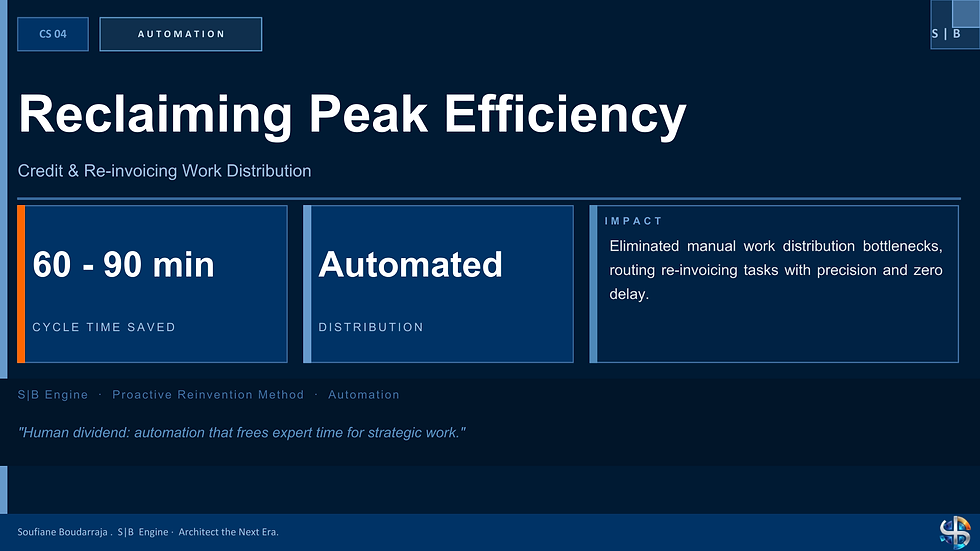
Reclaiming the Morning
How automating daily FSR data processing returned 60–90 minutes of expert capacity to two global operations teams, every single day.

— THE SITUATION
The North America and EMEA operations teams started every working day the same way: 60 to 90 minutes of manual data extraction, structuring, and task distribution before any actual work could begin.
It was a design flaw, not a workload problem. The system required a human in the loop for work a machine could do more accurately and without delay.
At quarter close, the problem doubled. The same manual cycle, at twice the volume, at exactly the moment when the teams' expertise was most needed elsewhere.
— WHAT CHANGED
An automated work distribution system was built to extract and structure FSR data from multiple queues without manual intervention, allocate tasks efficiently, and scale to handle peak-period volumes without degradation.
The teams no longer started the day at the loading dock. They started at their stations, with the work already in front of them.
— THE DELTA
60–90 min reclaimed daily, per team | Zero manual data prep required | Scales at quarter-close, no degradation |
The morning was reclaimed. Accuracy improved. Quarter-close performance held steady without additional manual effort. The teams' first hours of every day were returned to the work that required their expertise.
— THE TAKEAWAY
"Automation is not about replacing people. It is about reclaiming the hours lost to repetitive work, and returning them to the capabilities that cannot be automated."
60 to 90 minutes per day sounds modest. Across two global teams, across every working day, it is an enormous and recurring loss, until it is not. That is the human dividend.