Efficiency Is a Product of Ownership
How transforming MERAT region bids and proposals from centralized dependency to sales self-sufficiency accelerated deal cycles, freed specialist capacity, and secured incremental investment through demonstrated ROI.

— THE SITUATION
sales teams across the MERAT region depended on a centralised support function for all bids and proposals, including standard, pre-approved elements that required no specialist expertise. The queue was the process. Sales teams waited. Deal cycles extended. And specialist capacity was consumed by routine work that never justified the expertise of the people doing it.
— WHAT CHANGED
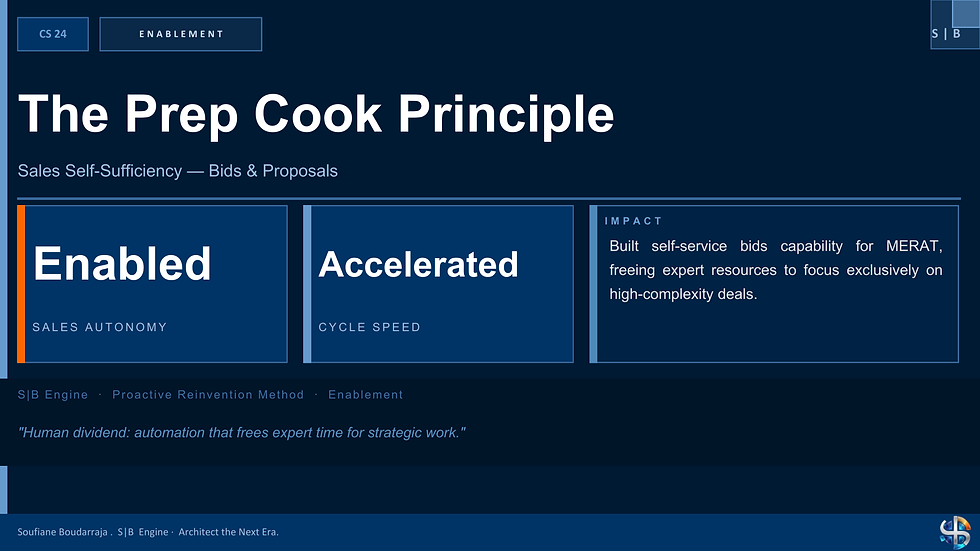
A systematic self-service framework was built: targeted training to enable independent standard bid management; a curated, compliant self-service resource suite for direct sales access; and an evidence-based ROI presentation that secured incremental funding from leadership. The model shifted from centralised dependency to distributed ownership.
The guiding principle: efficiency is a product of ownership. When teams own the standard elements of their work, the specialists are free for the work that actually requires them.
— THE DELTA
Self-service standard bids, MERAT sales | Faster turnaround, deal acceleration | AOP aligned all MERAT countries |
Standard proposals managed independently by sales. Turnaround times accelerated. Specialist resources redirected to complex, strategic opportunities. AOP targets aligned across all MERAT countries. Incremental investment secured through demonstrated ROI.
— THE TAKEAWAY
"Efficiency is a product of ownership. When teams own the standard elements of their work, the specialists are free to focus on the work that actually requires their expertise."
Route standard work to the people best placed to own it. Route specialist work to the people best placed to win it. That alignment is the foundation of a scalable, self-sufficient sales support model.