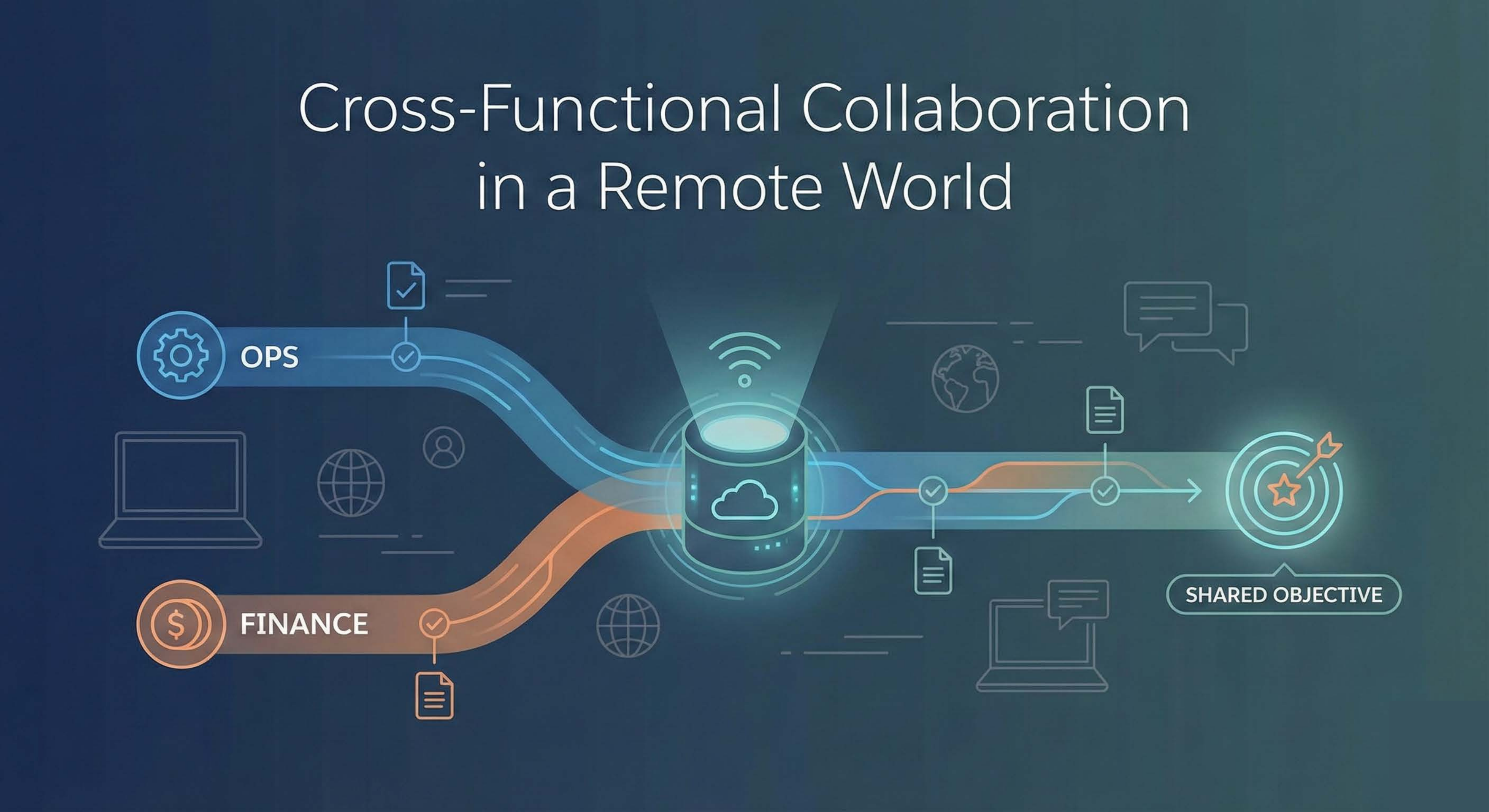
Complex work rarely lives in a single function. Marketing knows what customers ask for, product understands what can be built, operations sees where the process breaks, and sales hears the friction in real time. When teams worked in the same building, the gaps between those views were sometimes bridged by proximity. A quick conversation in the hallway, a glance across the table during a meeting, or an impromptu gathering at someone's desk could resolve ambiguity before it became a problem. In remote setups, nothing fills the gaps unless leaders design for it. Organizations face a choice. They can treat cross-functional collaboration as something that will happen naturally if people are well-intentioned and meetings are scheduled. Or they can recognize that collaboration in distributed environments requires deliberate architecture, clear systems that define outcomes, assign ownership, standardize communication, and make progress visible. The first approach relies on heroics. When problems surface, someone steps in to broker the connection, translate between functions, and push the work forward through individual effort. That pattern creates dependency and burnout. The second approach is built on the Architect Mindset. Leaders design repeatable processes that make collaboration routine rather than exceptional.