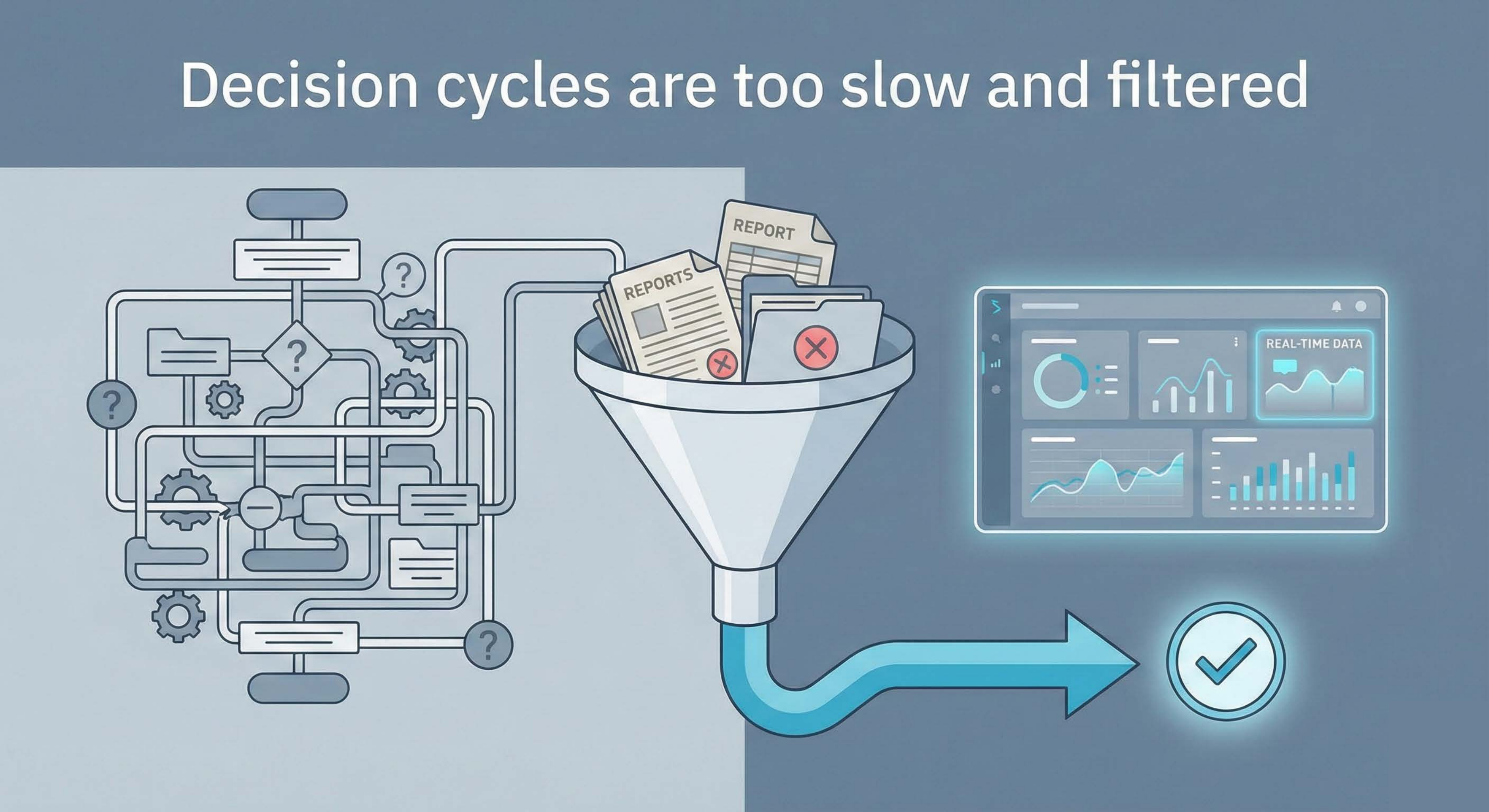
Most decision cycles do not slow down because leaders do not know what to do. They slow down because leaders do not know what is true right now. That is the part people avoid saying out loud. In many organizations, truth arrives late. It arrives as a monthly pack, a polished narrative, a spreadsheet that has already been summarized twice, and a set of conclusions that feel safe enough to present. By the time it reaches the decision table, it is filtered. Not always intentionally. Filtered because people translate complexity into something manageable, and because nobody wants to show uncertainty in front of leadership. The traditional response to slow decisions is reactive heroism. Leaders become decision heroes who compensate for latency through personal intervention, request additional data cuts to verify filtered information, and demonstrate value through their ability to make calls despite incomplete pictures. This heroism gets some decisions made, but it does not fix the cycle. It builds organizations where decision speed depends on heroic leaders cutting through filters rather than systems that prevent filtering.