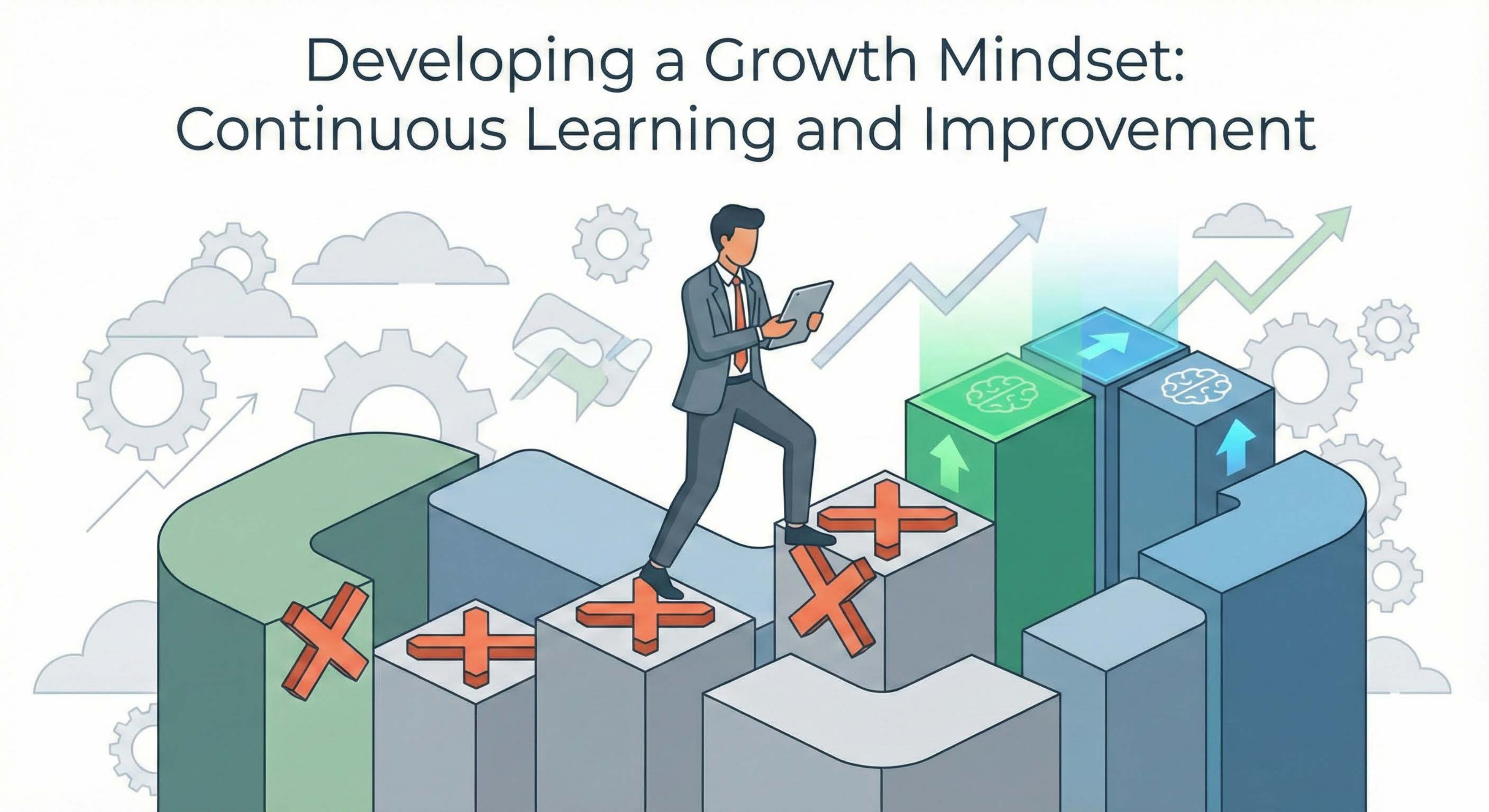
Every career that grows and sustains over time shares one common thread. The person behind it chose to keep learning when standing still would have been easier. After nearly two decades in transformation work, the observation stands firm that the leaders who last are not necessarily the ones with the biggest titles or the deepest expertise in a given year. They are the ones who continue to stretch, who adapt when conditions shift, and who turn setbacks into steppingstones. That discipline of treating every challenge as an invitation to learn is what a growth mindset looks like in practice. This is not about motivation or inspiration. It is about architecture. The person who builds learning into their operating rhythm, who creates systems for continuous improvement rather than waiting for crisis to force adaptation, that person moves from reactive heroics to proactive design. The term gained attention through the work of psychologist Carol Dweck, but long before it was formalized, the reality played out in workplaces. A growth mindset is the belief that skills are not fixed, that talent is not a ceiling, and that confidence can be earned through deliberate practice. Its opposite, the fixed mindset, quietly assumes that ability is innate and unchangeable. That assumption kills careers faster than any downturn or disruption.