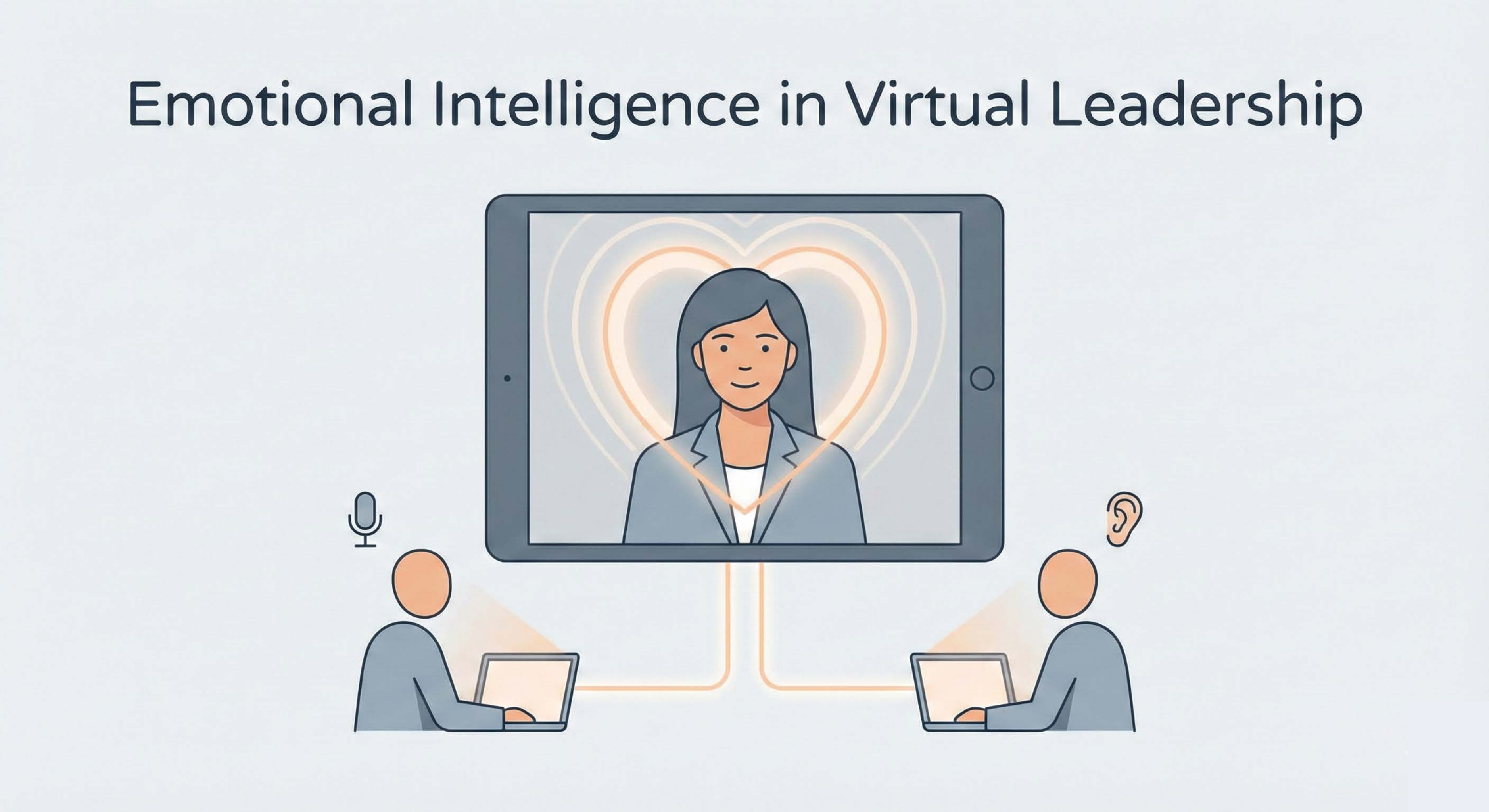
When leading teams virtually for the first time, it is easy to underestimate how different the experience becomes. In the office, leadership often happened in the small moments: a quick chat in the hallway, a glance that showed someone was under pressure, or casual laughter that reminded everyone they belonged. In a remote setting, those signals disappear unless intentionally recreated. The traditional response is to become an operational hero who compensates for lost visibility through increased activity... The alternative is the architect mindset. Rather than compensating for the absence of physical cues through heroic personal sensitivity, the architect designs systems that embed emotional intelligence into how teams operate.