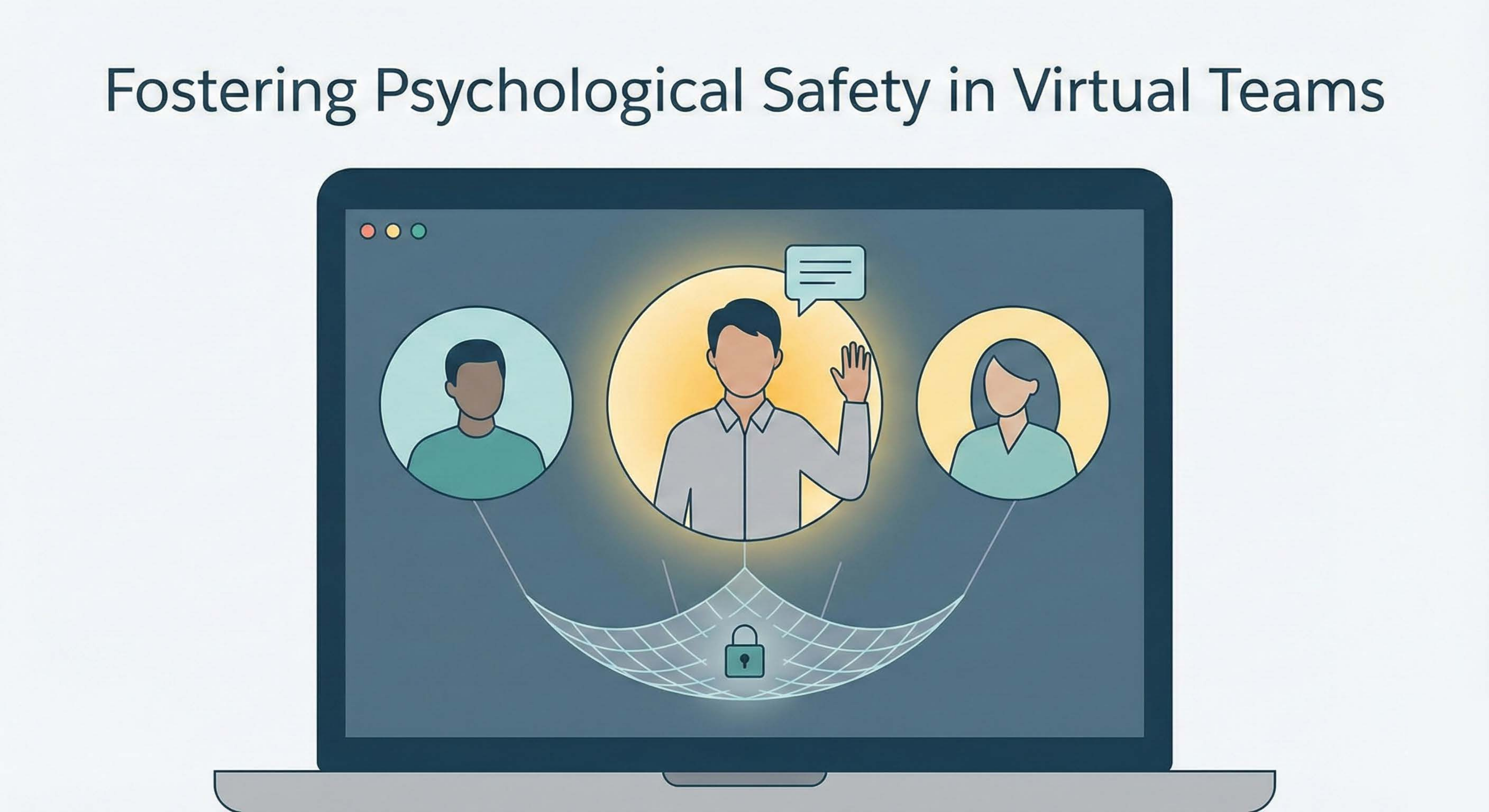
The small moments that used to stitch teams together are gone. There is no quiet walk back from a meeting room, no quick read of a colleague's expression across a table, no reassuring tap on the shoulder after a tough call. When work moved online, the task list survived, but many of the cues that tell us we are safe with each other did not. Organizations face a choice. They can treat psychological safety as a soft concept, something that matters only when teams are already performing well. Or they can recognize it as foundational infrastructure, the precondition for honest communication, early risk identification, and the kind of collaboration that produces measurable results. The first approach tolerates silence and treats it as agreement. The second approach understands that silence is a warning sign, an indicator that people do not feel safe enough to speak. That is why psychological safety matters more now. It is the feeling that you can share an idea that is not fully formed, ask a basic question, or admit a mistake without being punished for it. In remote teams, that feeling must be built with intention.