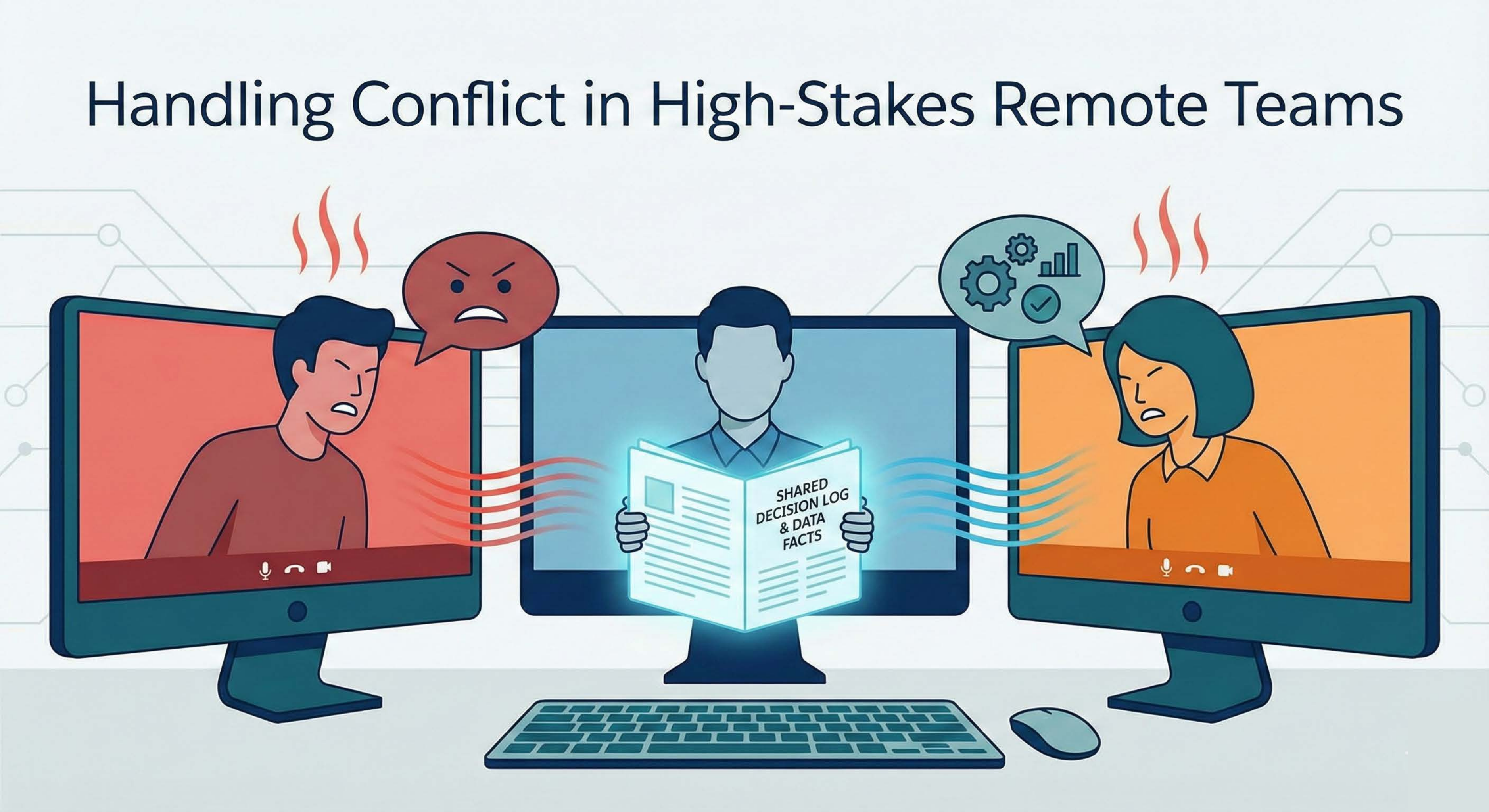
Conflict shows up in every team, but in remote work it often lands harder. A short message can read colder than intended, a delayed reply can feel like dismissal, and the lack of hallway chats removes the small repairs we rely on to keep trust intact. When deadlines are tight and stakes are high, little misunderstandings can snowball. Organizations face a choice. They can treat conflict as an interpersonal problem to be managed case by case, relying on leaders to step in when tensions escalate and hoping that individual interventions will keep teams functional. Or they can recognize that most remote conflict is a systems problem, a symptom of missing infrastructure rather than difficult personalities. The first approach is built on reactive heroics. Leaders spend their time mediating disputes, translating between functions, and repairing relationships that fractured because the system failed to provide the clarity, rhythm, and shared context that remote teams require. That pattern creates dependency and burnout. The heroes who keep the peace become bottlenecks. Their capacity is finite. When they are unavailable or when they leave, conflict resurges because no one built the systems that would prevent it. The good news is that conflict does not have to derail momentum. Handled with intention, it becomes a moment to reset assumptions, tighten alignment, and leave the team stronger than before.