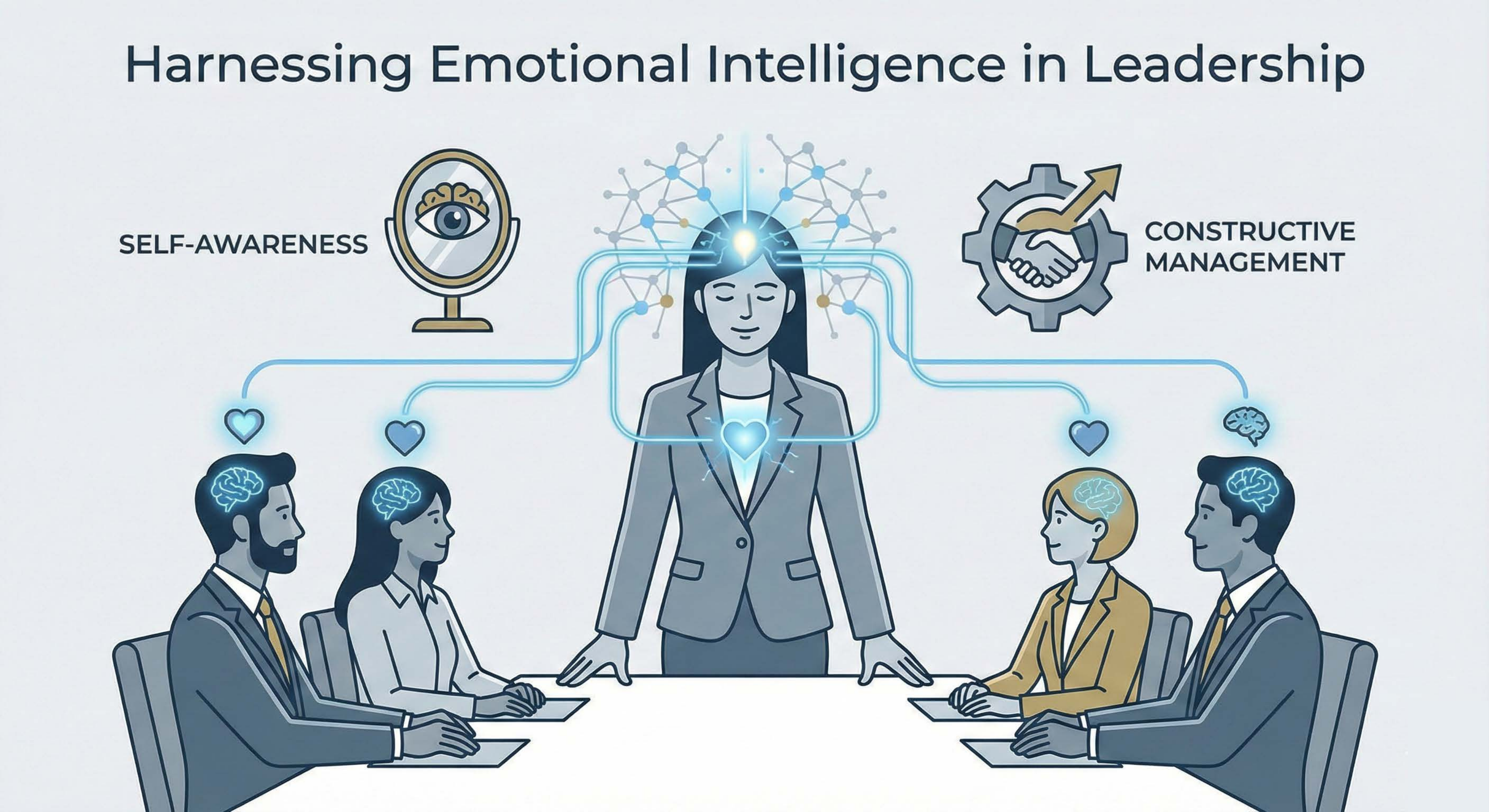
Leadership is not only about strategy, planning, and execution. It is also about understanding people, how they think, how they feel, and how those emotions shape the way they work. Over the years, technically brilliant leaders fail because they ignore the emotional dimension of leadership, and others succeed because they know how to connect, empathize, and inspire. That ability is what we call emotional intelligence, and it is one of the most decisive skills a leader can develop. This is the fundamental divide between technical competence and leadership effectiveness. The operational hero focuses exclusively on strategy and execution while ignoring emotional dynamics. The architect balances technical execution with emotional awareness. One optimizes for task completion. The other optimizes for sustained performance through people. The team engagement and retention difference is dramatic. At its core, emotional intelligence is about recognizing your own emotions, managing them constructively, and being attuned to the emotions of others. It sounds simple, but in practice, it requires constant attention and discipline.