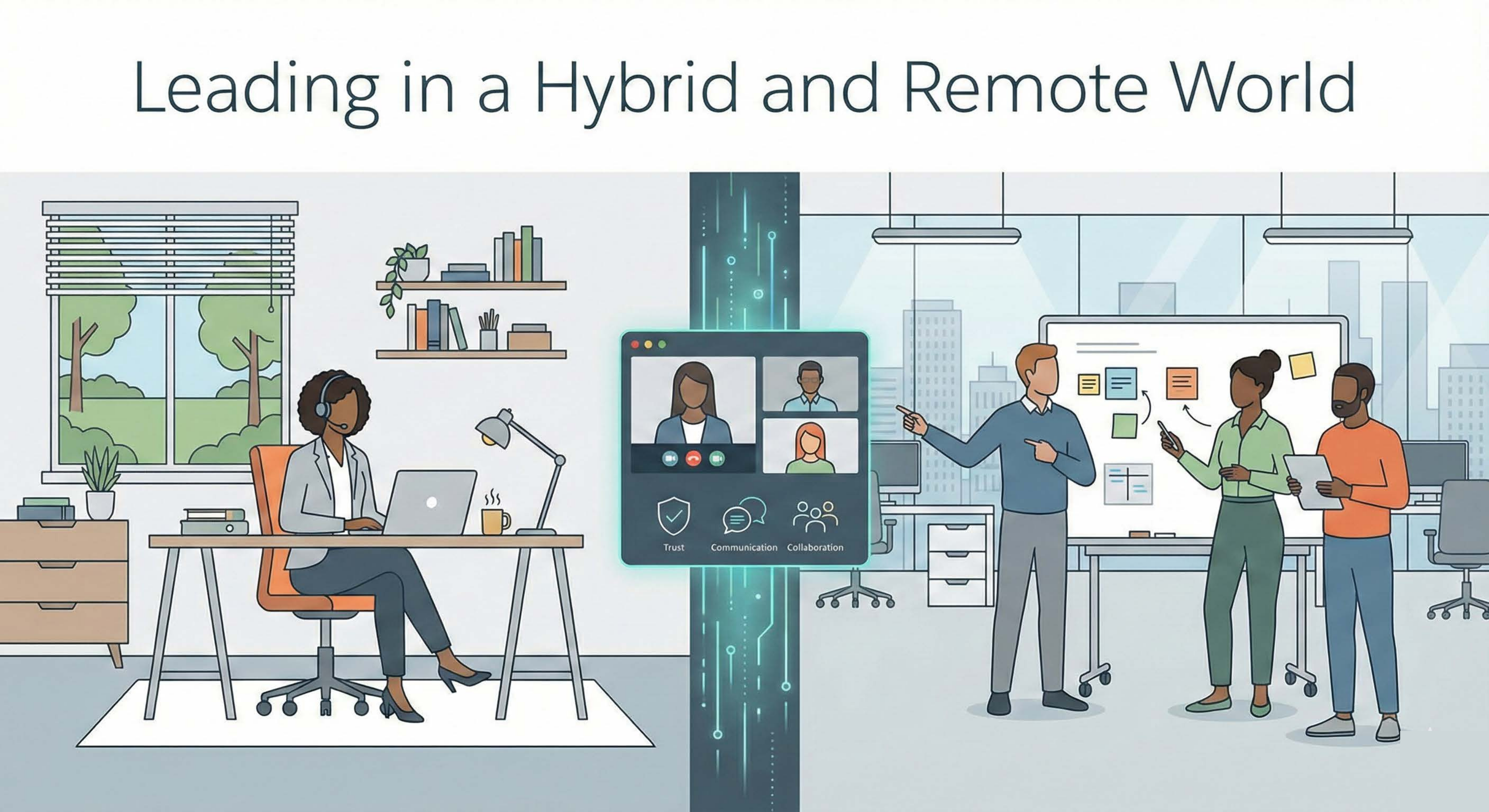
The way we work has changed permanently. Hybrid and remote environments are no longer experiments. They have become the default reality for many organizations. For those who began careers when offices were the heartbeat of collaboration, this shift has been profound. The challenge is not just logistical. It is deeply human. Leaders are being asked to build trust, foster connection, and inspire unity across digital and physical boundaries. The traditional response is reactive heroism. Leaders become operational heroes who compensate for distance through increased personal visibility, scheduling constant video calls to maintain presence, responding immediately to every message to demonstrate availability, and working across time zones to ensure no team member feels neglected. This heroism is unsustainable. It creates dependency on the leader's constant availability rather than building team capability to function independently. It exhausts leadership bandwidth through always-on responsiveness rather than establishing rhythms that protect both connection and recovery. It treats distance as a problem to be overcome through personal effort rather than as a condition to be systematically addressed through design. The alternative is the architect mindset. Rather than compensating for hybrid and remote challenges through heroic personal intervention, the architect designs systems that make trust, connection, and collaboration the natural outcomes of how work is structured. This means building communication frameworks that maintain clarity across distance, establishing rituals that create connection without requiring constant availability, and designing workflows that enable asynchronous collaboration without sacrificing coordination.