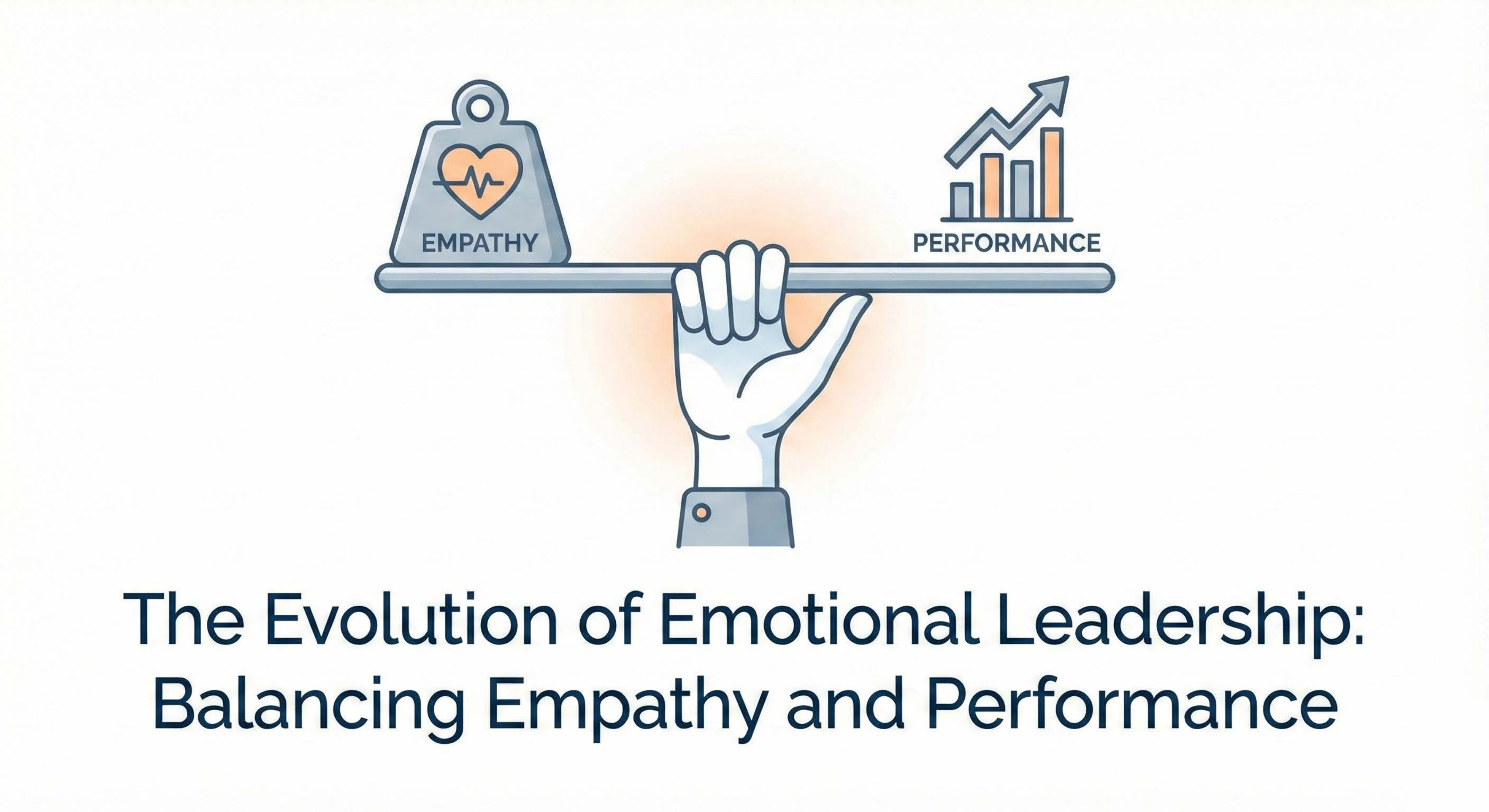
Leadership grows and shifts with the world around us. The expectations on leaders today are no longer limited to managing tasks or hitting KPIs. Equally important is the ability to connect emotionally, foster trust, and create environments where teams feel empowered. Emotional leadership has become less of a nice-to-have and more of an imperative. It is the bridge between performance and well-being, between delivering results and nurturing a team that thrives. The traditional response to this dual demand is reactive heroism. Leaders become emotional heroes who demonstrate empathy through exceptional personal sensitivity, investing their own emotional labor to support team members, and earning respect through their visible capacity to maintain both performance and morale through individual effort. This heroism creates genuine connection, but it does not scale. It builds organizations where emotional support depends on heroic leaders rather than systems that embed care into organizational processes. The alternative is the architect mindset. Rather than providing emotional support through personal heroics, the architect designs systems that make empathy and accountability work together systematically. This means building frameworks where support is embedded in processes rather than depending on individual leaders noticing distress, establishing practices where check-ins are structured rituals rather than ad hoc responses to visible problems, and creating cultures where emotional intelligence is distributed capability rather than concentrated in exceptional individuals. Emotional leadership is not about leaders who can somehow balance empathy and performance through personal sensitivity. It is about designing organizations where empathy and performance reinforce each other through systematic design.