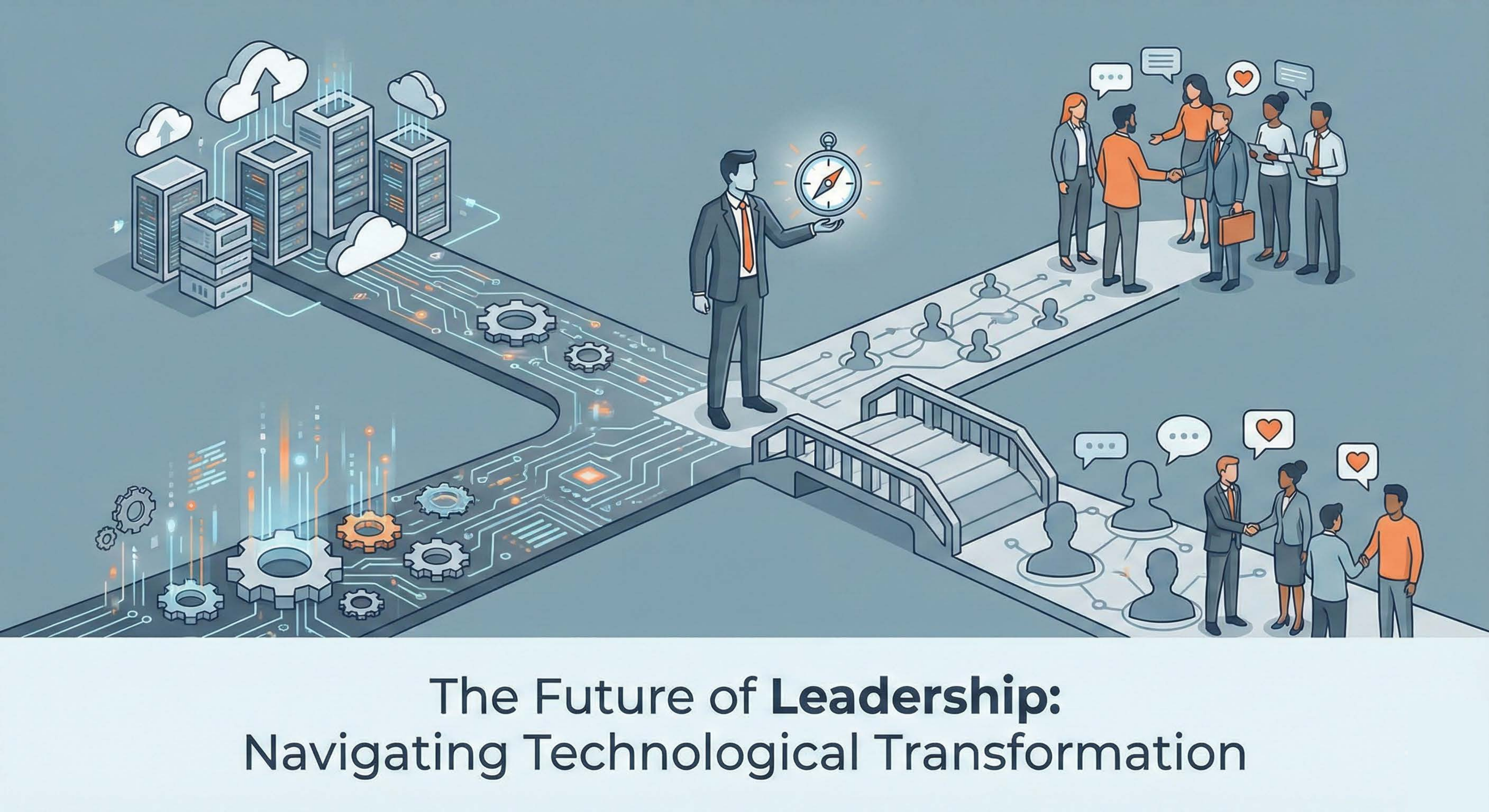
The nature of leadership has always changed with the times, but today the speed of change is something entirely new. Hybrid and remote work have reshaped how teams connect, while new technologies continue to redefine how businesses operate. Across years of leading diverse teams, the leaders who thrive are not the ones with the most tools or the loudest voices. They are the ones who know how to adapt, how to stay human in a digital environment, and how to balance efficiency with trust. The traditional response to technological transformation is reactive heroism. Leaders become operational heroes who demonstrate mastery by personally adopting every new tool, proving value through visible technical fluency, and guiding teams through change through individual expertise. This heroism creates respect for technical capability, but it does not build organizational capacity. It creates dependency on leaders who can navigate technology rather than building systems that enable technology adoption at scale. The alternative is the architect mindset. Rather than demonstrating technology mastery through personal example, the architect designs systems that enable effective technology adoption across the organization. This means building frameworks where technology enhances rather than replaces human connection, establishing processes where tools simplify rather than complicate workflows, and creating cultures where technological change is normalized rather than treated as disruption requiring heroic navigation. The future of leadership is not about having the most advanced tools or the deepest technical expertise. It is about designing environments where technology serves human capability and organizational mission rather than becoming an end in itself.