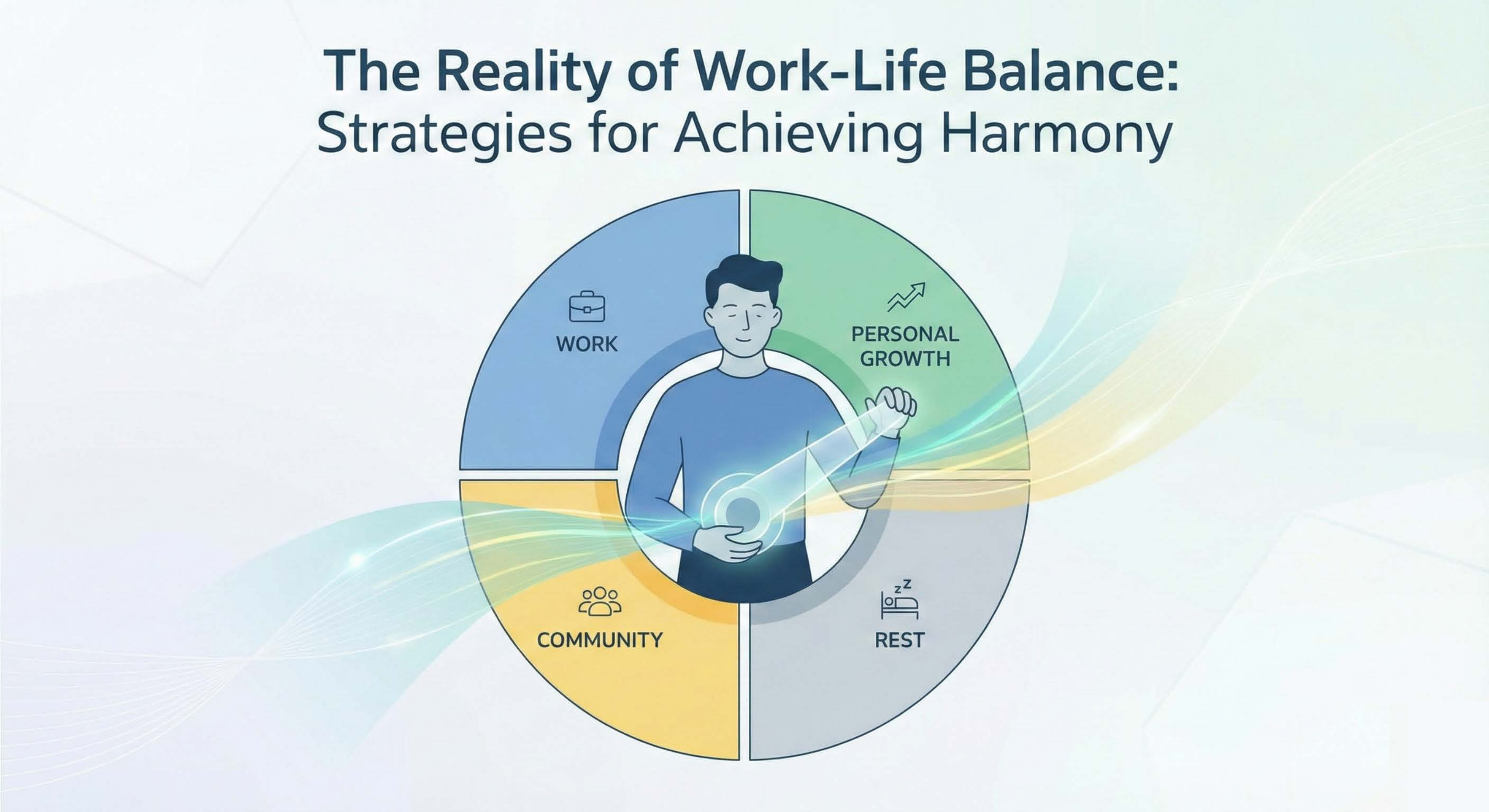
Work-life balance often seems like an elusive goal, but what works for one person might not work for another, even if their circumstances appear similar. Finding harmony in navigating life and all its challenges is more about personal fit than a fixed formula. This is not a problem that can be solved through heroic effort alone. The people who succeed at sustaining balance over the long term are not the ones who push harder or sacrifice more. They are the ones who design systems that make balance structural rather than circumstantial. They move from reactive firefighting, where every week is a crisis to be managed, to proactive architecture, where the defaults themselves support a sustainable rhythm. Work-life balance is not about a perfect 50/50 split between work and personal life. It is about finding a harmonious integration that works for you. This balance can look different for everyone, depending on their career, family situation, and personal goals. What worked for one person may not work for someone else, and the reverse is equally true. The challenge is that most advice on balance assumes uniformity. It assumes that everyone has the same constraints, the same definition of success, and the same resources. In reality, balance is highly contextual. A single parent working two jobs has different constraints than a senior executive with domestic help. A caregiver supporting an elderly parent faces different trade-offs than someone without dependent responsibilities. Recognizing this variation is the first step toward designing solutions that actually fit.